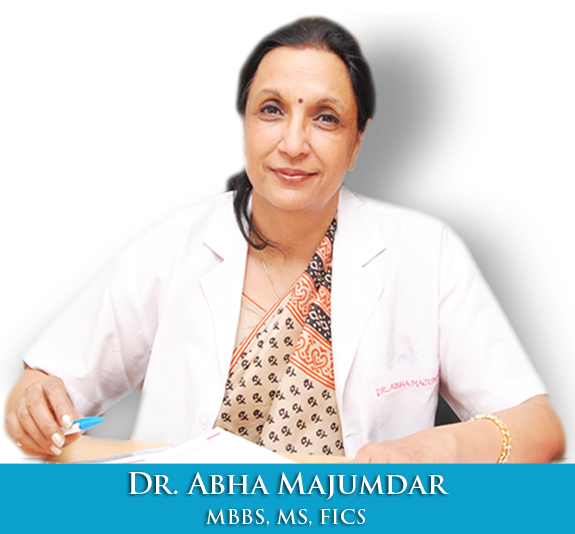
Learning that your egg count is lower than expected can be deeply overwhelming, but it is not the end of your parenting dreams. Prof. (Dr.) Abha Majumdar and her specialized team at Sir Ganga Ram Hospital use advanced protocols to help women turn low reserves into successful, healthy pregnancies.
Every woman is born with a finite, lifelong bank of eggs. Diminished Ovarian Reserve (DOR) means that the remaining number of healthy eggs inside your ovaries has dropped faster than normal for your current age. While this naturally makes it take longer to conceive on your own, remember: it only takes one high-quality egg to achieve a healthy baby.
Common Signs: DOR rarely has obvious symptoms. It is usually discovered when periods begin shortening (e.g., changing from a 28-day cycle to a 24-day cycle) or when couples encounter unexpected delays while trying to get pregnant.
Premature Ovarian Failure occurs when a woman’s ovaries put an early pause on their routine function before she reaches the age of 40. When this happens, the ovaries stop releasing eggs regularly and lower their production of vital reproductive hormones like estrogen.
Understanding the Impact: This condition can cause periods to become highly unpredictable or completely vanish for months at a time. It may also bring on early menopausal discomforts such as sudden hot flashes, night sweats, mood shifts, or unprovoked fatigue.
How we safely optimize your care step-by-step:
If tests show you have a low egg reserve but are still developing active follicles, our target is to maximize the quality and collection of your remaining eggs before your biological timeline shrinks further.
• Step 1: Priming & Quality Enhancement: Before starting a cycle, we utilize targeted pre-treatment therapies, high-potency antioxidants, and cellular health protocols to optimize the growth environment inside your ovaries.
• Step 2: Customized Mild Stimulation (Mini-IVF): Heavy hormonal treatment doses often fail or exhaust a low reserve. Dr. Abha Majumdar specializes in tailored “Mild Stimulation” protocols that use gentle, low-dose medications to harvest fewer, but significantly higher-quality, structurally strong eggs.
• Step 3: Embryo Accumulation (Embryo Banking): For cases with very low single-cycle numbers, we can gently collect and fertilize eggs over two or three brief cycles. We securely bank these embryos in our state-of-the-art laboratory, allowing us to select the absolute strongest embryo for transfer.
When the ovaries have completely ceased natural functioning before age 40, or if multiple custom cycles indicate your own egg quality is no longer viable, a donor egg offers the highest and safest chance of carrying a healthy baby.
• Step 1: Meticulous Selection & Screening: We coordinate with healthy, young, fully screened donors to provide exceptional egg health. Your privacy, confidentiality, and comfort are stringently protected throughout this process.
• Step 2: Uterine Synchronization: While the donor eggs are gently prepared, we put you on a comfortable oral protocol to perfectly balance and thicken your uterine lining, mimicking a natural natural cycle.
• Step 3: Embryo Transfer & Motherhood: The donor egg is fertilized with your partner’s sperm in our embryology lab. The resulting healthy embryo is transferred into your warm, receptive womb, allowing you to experience the beautiful journey of pregnancy, biological bonding, and delivery.
Yes, natural pregnancy is still possible with low AMH, provided you are ovulating regularly and your fallopian tubes are healthy. AMH measures egg quantity, not quality. However, because a low AMH means your timeline is shorter, consulting a specialist early helps you map out a safe, proactive path.
Early menopause means your periods stop permanently before age 45, and the ovaries do not restart. With Premature Ovarian Failure (POF), the ovaries are underperforming but haven’t completely shut down forever. Women with POF can still have occasional, unpredictable periods and even conceive with the right clinical support.
A lower egg count does not mean your baby will have health issues. A baby’s development depends on the quality of the single egg and sperm that create the embryo. Our focus is purely on choosing and cultivating the highest quality eggs available in your reserve.
If multiple IVF cycles using your own eggs haven’t succeeded due to quality limitations, or if POF has fully depleted your available follicles, a donor egg is often the most successful and rewarding choice. Dr. Abha Majumdar provides gentle, confidential counseling to help you and your partner make the most comfortable decision for your family’s future.