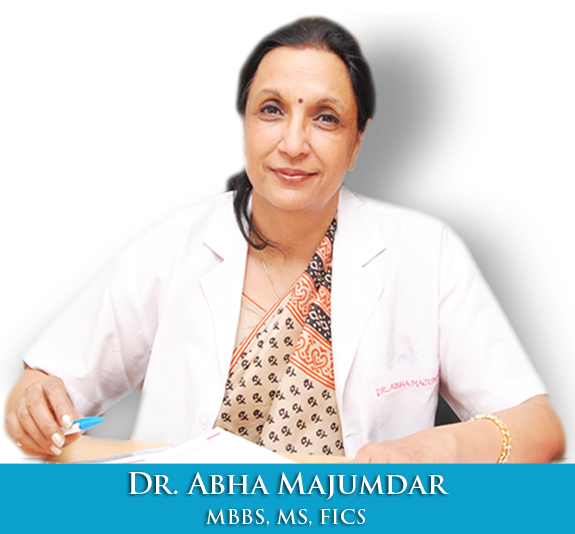
If you have been diagnosed with blocked fallopian tubes or internal pelvic scar tissue—please remember that successful motherhood is still fully within your reach. Prof. (Dr.) Abha Majumdar and her expert clinical team provide advanced reproductive surgeries and personalized IVF protocols to safely help you bypass these structural blockages.
The fallopian tubes are two delicate, narrow pathways where the egg and sperm naturally meet for fertilization. A tubal blockage (tubal occlusion) creates a physical barrier that stops sperm from reaching the egg or prevents a fertilized egg from travelling safely down into the uterus. While it can sometimes be performed intentionally as a sterilization procedure (tubal ligation), blockages often occur involuntarily due to underlying diseases, leading to fertility delays.
• Hydrosalpinx (Fluid Accumulation): This occurs when a severe blockage causes the end of the tube to swell and fill with an unhealthy clear fluid. This fluid can leak backward into the womb, acting like a hostile wash that hinders an embryo from attaching to the uterine lining. Addressing a hydrosalpinx is vital to protecting your future pregnancy success.
Pelvic adhesions are thin, web-like bands of scar tissue that can cause your pelvic organs—like your ovaries, uterus, and fallopian tubes—to abnormally stick together. These internal knots restrict the natural, gentle movement your fallopian tubes need to safely pick up a mature egg when you ovulate.
What Causes These Issues? Involuntary tubal blocks and adhesions typically develop due to pelvic inflammatory disease (PID), infections like salpingitis or pelvic peritonitis, advanced endometriosis, previous abdominal surgeries (like an appendix removal), or minor congenital malformations present from birth.
If your fallopian tubes are structurally sound outside of the blockage, micro-surgical or laparoscopic reconstruction performed by specialized gynecologic reproductive surgeons can help restore your natural fertility, allowing you to conceive naturally afterward.
• Tubal Anastomosis: Meticulously removing the blocked or scarred mid-segment of the tube and reconnecting the remaining healthy, open ends.
• Salpingostomy: Creating a clean new opening near the outer (fimbrial) end to correct distal blockages caused by old PID or endometriosis.
• Tubal Implantation: Safely bypassing blockages located right at the entry point of the womb by creating a secure new opening for the healthy portion of the tube.
When your fallopian tubes are severely damaged, heavily scarred, or blocked on both sides, attempting surgical repair may increase risks. In Vitro Fertilization (IVF) serves as an exceptionally reliable solution because it replaces the function of the fallopian tubes entirely.
• How IVF Bypasses the Block: Eggs are gently harvested straight from your ovaries, completely skipping the fallopian tubes. They are safely fertilized with your partner’s sperm in our advanced embryology laboratory.
• Safe Embryo Transfer: The resulting healthy embryo is placed directly inside your prepared womb. Because the tubes are never used in this process, your chances of a successful pregnancy remain exceptionally high.
• Pre-IVF Tubal Management (Salpingectomy / Clipping): If a severe, fluid-filled hydrosalpinx is present, performing a brief laparoscopic clipping or removal of the damaged tube before an embryo transfer is highly recommended. This stops harmful fluids from leaking into the uterus, significantly raising your final pregnancy success rates.
Tubal blockages typically have no visible or physical symptoms. Most women experience normal monthly cycles and feel completely healthy, only discovering the blockage during a formal infertility check-up or when facing an unexpected ectopic pregnancy.
Yes. If you have one open, structurally healthy tube and your ovaries are ovulating normally on that side, natural conception or simple options like IUI remain completely possible. If both tubes are blocked, corrective surgery or IVF will be needed.
Yes. If a tube is partially blocked or structurally scarred, a fertilized egg can become physically trapped inside the narrow pathway instead of reaching the womb. This causes a dangerous tubal (ectopic) pregnancy. This is why evaluating your tubal health safely before conceiving is so critical.
It depends entirely on your specific body. Reconstructive surgery allows you the chance to conceive naturally multiple times afterward. However, if the tubal damage is severe or widespread, IVF is generally considered the faster, safer, and more successful option because it completely bypasses the fallopian tubes.
Yes, occasionally. For some women with tiny mucus plugs or very minor loose debris within the pathways, the gentle pressure applied during an HSG or SSG fluid dye test can naturally clear out the tube, leading to a slight increase in natural conception immediately following the test.