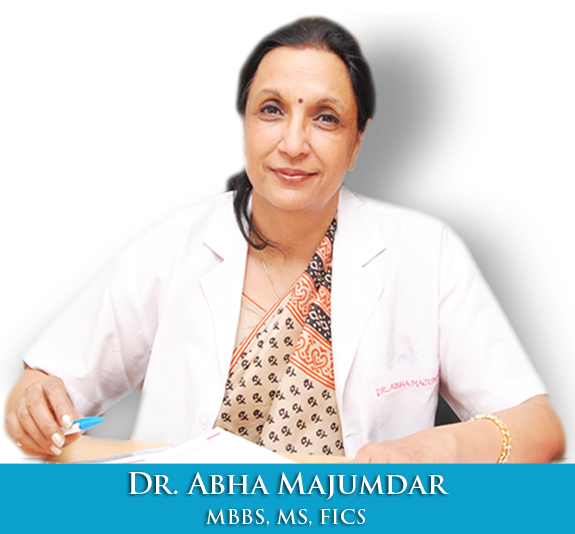
For an embryo to plant securely and grow into a healthy baby, the inner room of your womb (the uterine cavity) must be entirely smooth, spacious, and free of obstructions. Prof. (Dr.) Abha Majumdar utilizes state-of-the-art diagnostic mapping and micro-reconstructive procedures to restore your womb’s natural shape, transforming structural difficulties into successful pregnancies.
The uterine cavity is the inner biological cradle designed to protect your baby for 9 months. If this room is misshapen or crowded by abnormal tissue growths, embryos cannot attach properly, resulting in implantation failure or repeated early miscarriages. Cavity Reconstruction involves advanced, scarless procedures to clean, widen, and smoothen this inner space, ensuring optimal blood flow and structural support.
Fibroids (rasoli) are benign muscular growths that can alter the womb’s structure depending on where they develop:
• Submucosal Fibroids: These grow right beneath the inner lining and bulge directly into the open cavity. Even small submucosal fibroids can act like a physical barrier to an embryo and cause heavy, painful menstrual cycles.
• Intramural & Subserosal Fibroids: These grow inside the thick muscular walls or on the outer surface of the womb. If they grow very large, they warp the blood supply and compress the inner room from the outside, preventing natural growth.
• Endometrial Polyps: Small, fragile, teardrop-shaped tissue growths (mase) arising from the inner lining. They create localized chemical changes that act like a subtle barrier to natural fertilization or safe embryo nesting.
• Intrauterine Adhesions (Asherman’s Syndrome): Thick bands of internal scar tissue that glue the front and back walls of the womb together. This frequently happens after past pelvic infections—such as **Genital Tuberculosis (TB)**—or aggressive previous uterine scraping, causing the inner room to shrink significantly.
• Uterine Septum: A birth variation where a congenital wall of tissue divides the womb down the middle. Because this partition lacks a rich blood supply, embryos that attach to it cannot thrive, often leading to repeated miscarriages.
For structural boundaries located completely inside the inner room (Polyps, Submucosal Fibroids, Septums, or Asherman’s scar bands), we perform precise treatments with **zero skin incisions, zero external stitches, and same-day discharge**.
• Hysteroscopic Polypectomy & Myomectomy: Using specialized micro-instruments via the camera guide, the polyp or protruding fibroid is cleanly shaved away down to its base, flattening the inner wall instantly.
• Hysteroscopic Septum Resection: The congenital tissue partition dividing the womb is carefully cut down the center, instantly merging two restricted halves into one large, beautifully shaped cavity.
• Adhesiolysis & Endometrial Activation: Glued scar tissue walls are gently separated. To ensure the delicate lining heals into a thick, plush bed rather than scarring back together, we apply advanced localized therapies, including hormone tracking and **Endometrial PRP (Platelet-Rich Plasma) Therapy** to stimulate healthy tissue growth.
When fibroids are large or buried deep inside the main muscular wall of the womb (Intramural Fibroids), warping the shape of the room from the outside, a precise keyhole approach is used.
• Precision Keyhole Extraction: Operating through three tiny points on the abdomen, bulky fibroids are safely isolated and removed while completely preserving all surrounding healthy uterine tissue layers.
• Multi-Layer Reconstructive Suturing: Dr. Abha Majumdar meticulously sews the muscle wall back together in multiple sturdy layers. This ensures the uterus retains maximum structural integrity, allowing it to stretch completely safely during a future full-term pregnancy.
Yes. Even a small polyp under 1 cm can cause micro-inflammation within the lining, preventing an embryo from embedding securely. Removing a polyp is a brief, comfortable 15-minute natural-path procedure that significantly increases natural and IVF success rates.
Absolutely not. For women wishing to build a family, a hysterectomy should not be performed for fibroids. Dr. Abha Majumdar specializes in fertility-saving Myomectomy, where only the fibroids are carefully removed while your uterus is left fully intact and beautifully reconstructed.
Genital TB can attack the inner lining of the womb, causing severe inflammation that leads to heavy scar tissue (Asherman’s Syndrome). This causes the walls of the womb to stick together, closing up the cavity. Through hysteroscopic adhesiolysis and targeted healing treatments, we can safely reopen and reconstruct the cavity room.
Because hysteroscopic procedures utilize your body’s natural pathways without any cuts or incisions on your skin, recovery is exceptionally fast. Most patients walk home comfortably within 3 to 4 hours of the procedure and can resume routine daily activities the very next morning.
For simple hysteroscopic polyp or inner fibroid clearing, you can safely plan to conceive or start an IVF transfer within 1 to 2 normal menstrual periods. For deeper, large-muscle laparoscopic surgeries, we recommend giving the uterine wall 3 to 4 months to heal into maximum structural strength before carrying a baby.
“`